


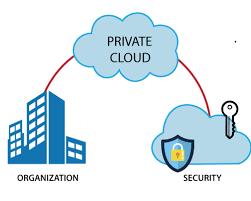
The world of private cloud computing is undergoing a significant evolution, driven by the rise of hybrid cloud and the need to deliver a more agile, public-cloud-like experience within the data center. To understand the future of this critical market, it is essential to analyze the key Private Cloud Services Market Trends that are shaping the next generation of on-premise and dedicated cloud platforms. These trends reveal a clear progression from complex, manually managed environments to more automated, abstracted, and consumption-based models. The overarching theme is the blurring of the lines between private and public clouds, with the goal of creating a seamless and consistent hybrid cloud operating model. These developments are making private clouds more powerful, more efficient, and more strategically important than ever.
The single most dominant trend is the move towards a "hybrid cloud control plane." In the past, private and public clouds were managed as separate, distinct silos with different tools and processes. This created operational complexity and made it difficult to move workloads between environments. The new trend is towards a unified management platform, often hosted in the public cloud, that can manage resources across both on-premise private clouds and one or more public clouds. Solutions like Microsoft's Azure Arc, AWS Outposts, and Google Anthos are prime examples of this. They allow administrators to use the same familiar tools and APIs to deploy and manage applications on their private cloud infrastructure as they do in the public cloud, creating a truly consistent hybrid experience and breaking down the operational silos.
Another powerful trend is the widespread adoption of containers and Kubernetes as the new application platform layer on top of the private cloud infrastructure. While virtual machines (VMs) are still widely used, modern, cloud-native applications are increasingly being built and deployed using container technology. Kubernetes has emerged as the de facto standard for orchestrating these containers at scale. In response, a key trend for private cloud platforms is to provide robust, enterprise-grade support for Kubernetes. This includes offering managed Kubernetes services that simplify the deployment and operation of container clusters. This shift to a container-centric model makes applications more portable, allowing them to be easily moved between a private cloud and any public cloud that supports Kubernetes, further enabling a flexible hybrid and multi-cloud strategy.
Finally, a critical trend is the shift in how private cloud infrastructure is consumed, moving from a traditional capital expenditure (CapEx) model to a more flexible, operational expenditure (OpEx) model. Instead of buying all their hardware upfront, organizations are increasingly looking for "as-a-Service" or pay-as-you-go consumption models for their on-premise infrastructure. Offerings like HPE GreenLake and Dell APEX are leading this trend. In this model, the vendor owns and maintains the hardware in the customer's data center, and the customer pays a monthly fee based on their actual usage. This provides the financial flexibility and cloud-like economics of the public cloud while retaining the security and control benefits of a dedicated, on-premise environment, representing the ultimate convergence of the private and public cloud models.
Top Trending Reports:

 English
 Русский