


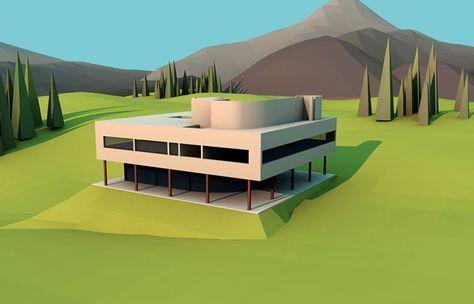
The world of digital image creation is in a state of constant and rapid evolution, driven by relentless advancements in hardware and software algorithms. To understand the future of this creative industry, it is crucial to analyze the key Visualization & 3D Rendering Software Market Trends that are defining the next generation of 3D production. These trends point towards a future where photorealistic rendering becomes faster, more accessible, and more intelligent. The overarching theme is the convergence of real-time and offline rendering, the infusion of artificial intelligence into the creative process, and the seamless integration of 3D visualization into broader collaborative, cloud-based workflows. These developments are not just making rendering faster; they are fundamentally changing how 3D content is created and consumed.
The most significant and disruptive trend is the rise of real-time ray tracing and the blurring of lines between game engines and traditional rendering software. For decades, there was a clear trade-off: fast but less realistic (real-time) or slow but photorealistic (offline). The advent of powerful GPUs with dedicated ray tracing hardware has changed everything. Game engines like Unreal Engine 5 can now produce stunning, photorealistic imagery in real-time, complete with accurate reflections, shadows, and global illumination. This has led to their widespread adoption in architectural visualization and virtual production for filmmaking, where the ability to see the final, rendered image instantly is a massive creative and efficiency advantage. This trend is forcing traditional offline renderers to focus on GPU acceleration to stay competitive.
Another powerful trend is the integration of Artificial Intelligence (AI) and machine learning into the rendering workflow. AI is being used to automate and accelerate many of the most time-consuming aspects of the process. One of the most important applications is "AI denoising." The rendering process naturally produces a noisy, speckled image, which traditionally required a very long time to clean up. AI denoisers can now intelligently remove this noise in a fraction of the time, dramatically reducing overall render times. AI is also being used for "smart upscaling" of images and for generating textures and materials. This infusion of AI is not replacing the artist but is acting as a powerful assistant, handling the tedious technical tasks and freeing up the artist to focus on creativity.
Finally, the shift to cloud-based workflows and collaborative platforms is a major trend that is democratizing access to high-end 3D production. Rendering is computationally intensive, but cloud rendering services allow anyone with an internet connection to tap into the power of a massive render farm on a pay-as-you-go basis, eliminating the need for expensive local hardware. Furthermore, cloud-based platforms like NVIDIA's Omniverse are creating a "metaverse" for 3D creators. These platforms allow multiple users, using different 3D software applications, to collaborate on the same scene in real-time. An architect using one program and a lighting artist using another can work together on the same virtual model simultaneously. This trend towards a universal, cloud-based, and collaborative 3D ecosystem is the future of digital content creation.
Top Trending Reports:

 English
 Русский