


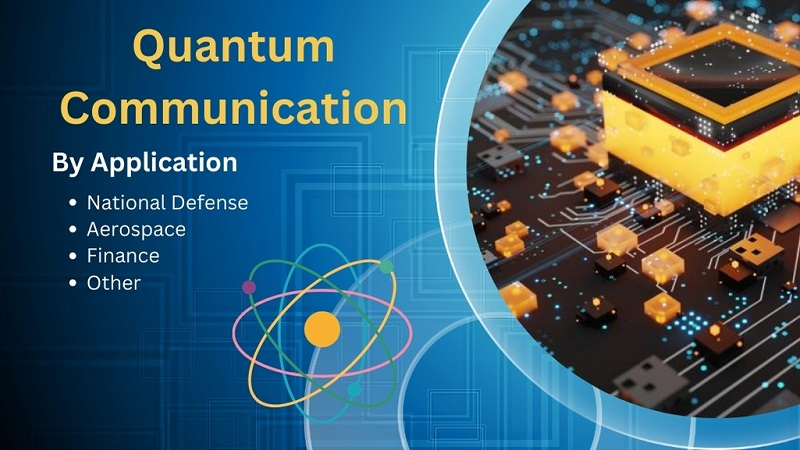
A practical Quantum Communication Market Analysis focuses on what is deployable today and what remains experimental. The most mature area is quantum key distribution, which provides secure key exchange using quantum states. Market analysis evaluates QKD architectures: point-to-point fiber links, trusted-node networks, and free-space links. Fiber-based QKD faces distance and attenuation limits, making it most suitable for metropolitan networks or data center interconnects. Trusted nodes can extend reach but require strong physical and operational security because intermediate nodes must be trusted. Free-space and satellite QKD can extend distance, but they introduce atmospheric, alignment, and operational complexity. Market analysis also emphasizes integration with classical systems. QKD generates keys, but those keys must be managed and delivered to encryption endpoints through key management systems. Therefore, interoperability with existing network encryption, VPNs, and security operations becomes a key adoption factor. Buyers need operational metrics like key rate, uptime, and link stability, not only theoretical security. Market analysis also considers the role of QKD relative to post-quantum cryptography, which is software-based and broadly deployable.
Technical analysis includes performance and reliability constraints. QKD key rates can vary with fiber length, losses, and environmental conditions. Detector technology, noise, and error correction affect usable key output. Market analysis therefore evaluates hardware maturity and maintenance requirements. Side-channel and implementation risks are important; practical QKD systems can be attacked if detectors or electronics leak information. Certification, testing, and secure hardware design are therefore key differentiators. Market analysis also examines cost drivers: specialized photon sources, detectors, and dedicated link equipment. These costs limit adoption to high-value scenarios. Another analysis focus is network integration complexity. Telecom operators need monitoring, provisioning, and fault management integration. Enterprises need key delivery integration with HSMs and KMS systems. Without integration, QKD remains isolated and hard to operationalize. Market analysis highlights that early adopters often run pilots to validate operational stability and integration, then scale selectively. The market also depends on fiber availability and rights-of-way, which can constrain deployment in some regions. Therefore, market analysis includes infrastructure readiness as well as technology readiness.
Risk analysis covers governance and operational security. Trusted-node networks require strong physical security, access control, and auditing at nodes. Supply chain assurance is critical because compromised components can undermine security. Operational reliability risk includes downtime and key rate degradation, which can disrupt encryption workflows if not handled gracefully. Market analysis emphasizes fallback mechanisms; systems must continue functioning if QKD keys are unavailable, often using classical key exchange as backup. Regulatory and policy considerations also influence risk, as some governments may require sovereignty in key management and hardware sourcing. Another risk is expectation mismatch. Quantum communication does not automatically secure all traffic; it improves key exchange for certain links. Organizations must align expectations and design the broader cryptographic system accordingly. Market analysis also notes that most organizations will deploy post-quantum cryptography widely and use quantum communication selectively. Therefore, the market may remain specialized but important. Providers that can demonstrate realistic use cases, clear operational playbooks, and transparent performance limitations will gain credibility.
Forward-looking market analysis suggests evolution toward more scalable quantum networks as research progresses. Quantum repeaters could extend distance without trusted nodes, but this remains research-heavy. Standards and interoperability testing will likely improve adoption of current QKD systems. Integration with enterprise key management and security operations will become more mature, reducing operational friction. Satellite QKD may expand for national-scale secure key distribution, though commercialization timelines are uncertain. Market analysis indicates that near-term growth will come from targeted deployments in finance, government, and critical infrastructure where the risk profile justifies cost. Longer-term, quantum communication may become part of national secure infrastructure, but widespread adoption depends on cost, operations, and standardization. The analysis conclusion is clear: quantum communication is promising, but adoption is driven by practical engineering, integration, and governance rather than theory alone.
Top Trending Reports:
Virtual Meeting Software Market

 English
 Русский