


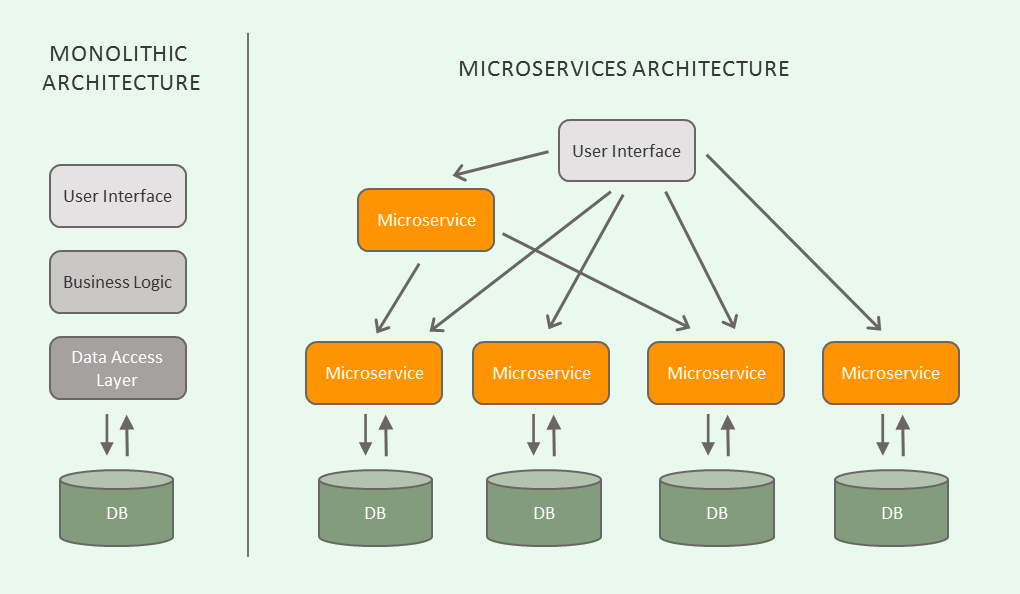
The Microservices Architecture Market growth is gaining exceptional momentum as enterprises worldwide transition toward cloud-native and digitally agile operating models. Organizations are moving away from traditional monolithic architectures in favor of modular, scalable, and independently deployable microservices frameworks. This architectural shift allows enterprises to release updates faster, improve application resilience, and scale services dynamically in response to real-time demand. As digital experience becomes a competitive differentiator, microservices are emerging as a foundational technology enabling innovation-driven enterprises.
Microservices Architecture Market Size was estimated at 7.7 USD Billion in 2024. The Microservices Architecture industry is projected to grow from 9.126 USD Billion in 2025 to 49.91 USD Billion by 2035, exhibiting a compound annual growth rate (CAGR) of 18.52% during the forecast period 2025 - 2035. This growth trajectory reflects increasing enterprise confidence in distributed software development models and cloud-based deployment strategies. Companies across BFSI, retail, healthcare, and IT services are actively investing in microservices to modernize legacy systems and support continuous delivery pipelines.
The growth of containerization technologies such as Docker and Kubernetes has played a pivotal role in accelerating adoption. These tools simplify service deployment, orchestration, and scaling across hybrid and multi-cloud environments. Enterprises are now able to maintain operational consistency while avoiding vendor lock-in, which aligns with modern IT governance strategies. The ability to independently scale critical services without impacting the entire application enhances operational efficiency and system uptime.
Another key driver of market growth is the increasing adoption of DevOps and agile development methodologies. Microservices architectures align seamlessly with DevOps practices, enabling automated testing, continuous integration, and faster release cycles. Development teams can work independently on different services, reducing bottlenecks and improving collaboration. This flexibility is especially critical for organizations operating in rapidly evolving digital markets.
Security innovation is also contributing to growth momentum. Advanced API gateways, service meshes, and zero-trust security models are helping enterprises mitigate the complexity associated with distributed systems. Enhanced observability and real-time monitoring tools are further strengthening reliability and performance management across microservices environments.
As enterprises continue prioritizing digital resilience, scalability, and innovation speed, the growth outlook for microservices architecture remains exceptionally strong across global markets.
Top trend Reports:
property management software market

 Українська
 Русский