


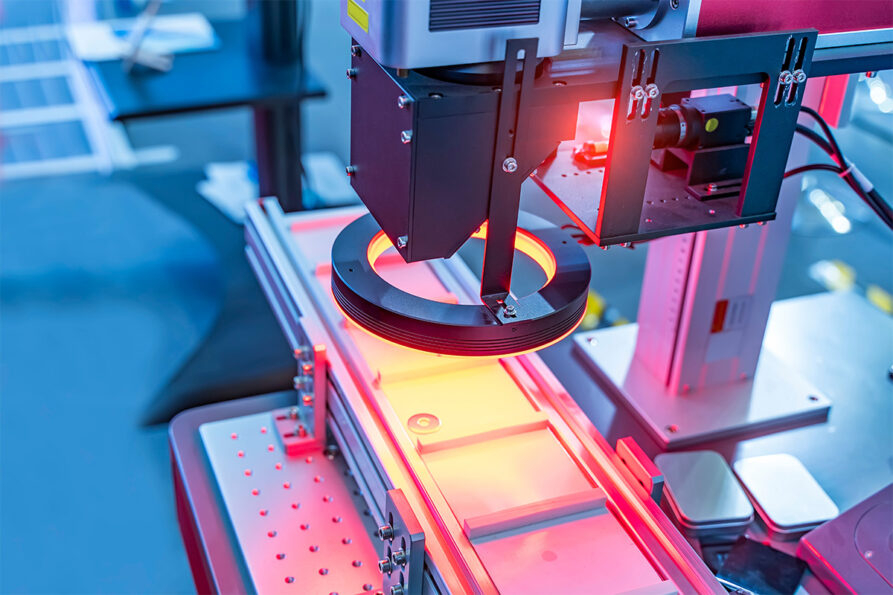
The efficacy and precision of the AI Vision Inspection Market are fundamentally underpinned by continuous innovation in its platform technologies. These platforms are the digital engines that enable the capture, processing, and interpretation of visual data, transforming raw images into actionable insights for quality control and automation. From high-speed industrial cameras and powerful GPU-accelerated computing to sophisticated Artificial Intelligence (AI) algorithms and intuitive software development kits, the FDP platform dictates the speed, accuracy, and adaptability of inspection systems. Understanding these core technological components and their development is key to grasping the industry's capabilities and future direction, as platforms define the boundaries of what is possible in the rapidly expanding realm of automated visual quality assurance. For a detailed analysis of these critical technological underpinnings, the AI Vision Inspection Market Platform report offers invaluable insights into the industry's technical evolution and market impact.
An AI vision inspection platform typically comprises several critical components working in synergy. At its core are high-resolution industrial cameras and advanced optical systems, capable of capturing images with precision and speed, often integrated with specialized lighting techniques (e.g., structured light, 3D laser scanners) to enhance defect visibility. Powerful computing hardware, frequently incorporating GPUs (Graphics Processing Units) or dedicated AI accelerators, provides the necessary processing power for real-time inference of complex AI models. Machine Learning (ML) frameworks and libraries, alongside specialized computer vision software suites, allow developers to train, deploy, and manage AI models for specific inspection tasks, from object detection and classification to anomaly detection. Cloud-based or edge-based deployment options offer flexibility in processing data, with edge AI enabling low-latency, on-device decision-making. Furthermore, robust APIs and SDKs are crucial for seamless integration with existing industrial control systems (PLCs), robotics, and manufacturing execution systems (MES), creating a cohesive and intelligent automation ecosystem.
However, the rapid innovation in AI vision inspection market platforms also brings its share of significant challenges. The technical complexity of integrating diverse hardware components (cameras, lighting, computing) with specialized AI software and existing industrial infrastructure can be substantial, requiring deep domain expertise and careful calibration. The need for vast amounts of high-quality, labeled data to train robust AI models is often a bottleneck, demanding considerable time and resources for data acquisition and annotation. Ensuring the real-time performance and reliability of AI models in dynamic industrial environments, where lighting conditions, product variations, and vibration can impact accuracy, remains a continuous engineering challenge. Furthermore, the management of data privacy and intellectual property when sharing proprietary visual data for model training, especially in cloud-based environments, necessitates robust security protocols and clear data governance policies, adding layers of complexity to platform design.
Despite these formidable challenges, the future of AI vision inspection market platforms is exceptionally promising, driven by continued technological breakthroughs. The development of more advanced AI algorithms, such as few-shot learning and self-supervised learning, will reduce the reliance on massive labeled datasets, enabling faster model deployment and greater adaptability to new defect types. Edge AI platforms, integrating powerful AI capabilities directly into smart cameras and embedded systems, will become more prevalent, offering ultra-low latency, enhanced data privacy, and decentralized decision-making at the point of inspection. The emergence of no-code/low-code AI vision platforms will democratize access, allowing non-experts to configure and deploy inspection solutions more easily. Furthermore, the integration of 3D vision and sensor fusion techniques will provide more comprehensive spatial understanding, ensuring AI vision inspection platforms remain at the forefront of intelligent quality assurance and industrial automation, solidifying their essential role in the next generation of smart manufacturing processes.
Explore More Like This in Our Regional Reports:
Canada Construction Software Market

 English
 Русский